
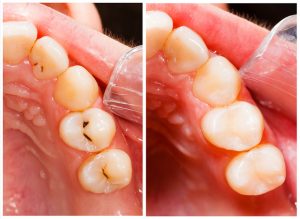
 Tooth Decay & Cavities — Turners Falls, MA
Tooth decay is the most common chronic disease in both children and adults — but it’s also highly preventable and very treatable when caught early. At Turners Falls Dental, Dr. Collura and his team diagnose and treat cavities at every stage, from the earliest signs of enamel erosion to more advanced decay requiring restorative treatment. Call (413) 774-6553 to schedule your evaluation today.
What Is Tooth Decay?
Tooth decay — also called dental caries — is the destruction of the hard outer surface of the tooth (enamel) and the layer beneath it (dentin) caused by acids produced by bacteria in your mouth. When sugars from food and drinks interact with bacteria in dental plaque, acid is produced that gradually dissolves tooth structure, eventually forming a cavity (a hole in the tooth).
If left untreated, decay progresses deeper into the tooth — eventually reaching the pulp (nerve and blood vessel tissue at the center), causing significant pain and potentially requiring root canal treatment or even extraction. This is why early diagnosis through regular dental exams at Turners Falls Dental is so important.
Stages of Tooth Decay
Tooth decay doesn’t happen overnight — it progresses through several stages:
- Initial Demineralization: Acid weakens the enamel, creating white spots on the tooth surface. This stage can sometimes be reversed with fluoride treatment.
- Enamel Decay: The enamel continues to break down, and a cavity begins to form. A composite filling is typically sufficient at this stage.
- Dentin Decay: The decay reaches the dentin, which is softer and more porous than enamel — meaning it progresses faster. Sensitivity increases. A filling or crown may be needed.
- Pulp Involvement: Bacteria reach the pulp, causing infection, significant pain, and swelling. Root canal treatment is typically required at this stage.
- Abscess: Infection spreads to the surrounding bone and tissue, creating a dental abscess. This is a dental emergency requiring immediate treatment.
Signs You May Have a Cavity
In early stages, cavities often produce no symptoms at all — which is why many patients don’t know they have decay until Dr. Collura identifies it during a routine exam. As decay progresses, you may notice:
- Tooth sensitivity to sweets, hot, or cold temperatures
- A visible hole or pit in a tooth
- Toothache or spontaneous tooth pain
- Pain when biting or chewing
- White, brown, or black staining on a tooth surface
If you’re experiencing any of these symptoms, call (413) 774-6553 to schedule an evaluation as soon as possible. The sooner decay is treated, the simpler and less expensive the treatment will be.
Treating Tooth Decay at Turners Falls Dental
The appropriate treatment for tooth decay depends on how far it has progressed:
- Fluoride treatment: For very early-stage enamel demineralization that hasn’t yet formed a cavity, professional fluoride application may help remineralize the enamel and stop decay in its tracks.
- Composite (tooth-colored) fillings: The most common treatment for cavities — the decayed material is removed and the tooth is restored with a natural-looking composite resin.
- Dental crowns: When decay is extensive and too much tooth structure has been lost for a filling to hold, a crown provides full coverage and restores the tooth’s strength. Turners Falls Dental offers CEREC® same-day crowns for one-visit restoration.
- Root canal treatment: When decay has reached the pulp, a root canal removes the infected tissue and seals the tooth before a crown is placed.
- Extraction: In the most severe cases where the tooth cannot be saved, extraction followed by a tooth replacement option such as a dental implant may be necessary.
Preventing Tooth Decay
The best treatment for tooth decay is preventing it from occurring in the first place. At Turners Falls Dental, our preventive care approach includes:
- Professional cleanings to remove plaque and tartar that brushing can’t reach
- BPA-free dental sealants to protect the grooves of back teeth in children and at-risk adults
- Professional fluoride applications to strengthen enamel
- Personalized oral hygiene instruction
- Regular dental exams to catch problems at the earliest, most treatable stage
Frequently Asked Questions About Tooth Decay
Can a cavity go away on its own?
In the very earliest stage — initial enamel demineralization — the process can potentially be reversed with fluoride treatment and improved oral hygiene. However, once a cavity (a hole in the enamel) has formed, it cannot heal on its own and will only get larger without treatment. If you suspect you have a cavity, call (413) 774-6553 to schedule an evaluation at Turners Falls Dental.
How do I know if I have a cavity?
Many cavities produce no symptoms until they become advanced. You might notice sensitivity to sweets, heat, or cold; a visible hole or dark spot on a tooth; or pain when biting. The only reliable way to detect cavities early is through regular dental exams and X-rays at Turners Falls Dental, where Dr. Collura can identify decay before it causes significant damage.
Does getting a cavity filled hurt?
No. Cavity treatment at Turners Falls Dental is performed under local anesthesia, so you should not feel any pain during the procedure. Some mild sensitivity afterward is normal and typically resolves within a week or two.
How can I prevent cavities?
Effective cavity prevention includes brushing twice a day with fluoride toothpaste, flossing daily, limiting sugary and acidic foods and drinks, drinking fluoridated water, and maintaining regular professional cleanings and exams at Turners Falls Dental. Dental sealants are also highly effective for children and at-risk adults.
How long does a cavity filling take?
Most composite fillings at Turners Falls Dental are completed in a single appointment lasting 30–60 minutes, depending on the size and location of the cavity. There’s no need for a second visit for a standard filling.
What happens if I ignore a cavity?
Untreated cavities grow larger over time, eventually reaching the inner pulp of the tooth. This causes significant pain, infection, and may require a root canal or extraction. What starts as a simple, affordable filling becomes a much more complex and costly treatment the longer it’s left untreated. Call (413) 774-6553 at the first sign of a problem.